
Generation forecast
Uses weather and history trends to estimate solar output so users can plan high-load periods earlier.
Hybrid Inverter + Smart Monitoring
Built for home storage, remote power supply, small commercial backup and markets with unstable grids. It helps you check load capacity, battery visibility, remote monitoring, fault reminders and future system expansion before choosing a solution.
01
Generation forecast
02
Battery runtime estimate
03
Fault diagnosis
Citation-ready summary
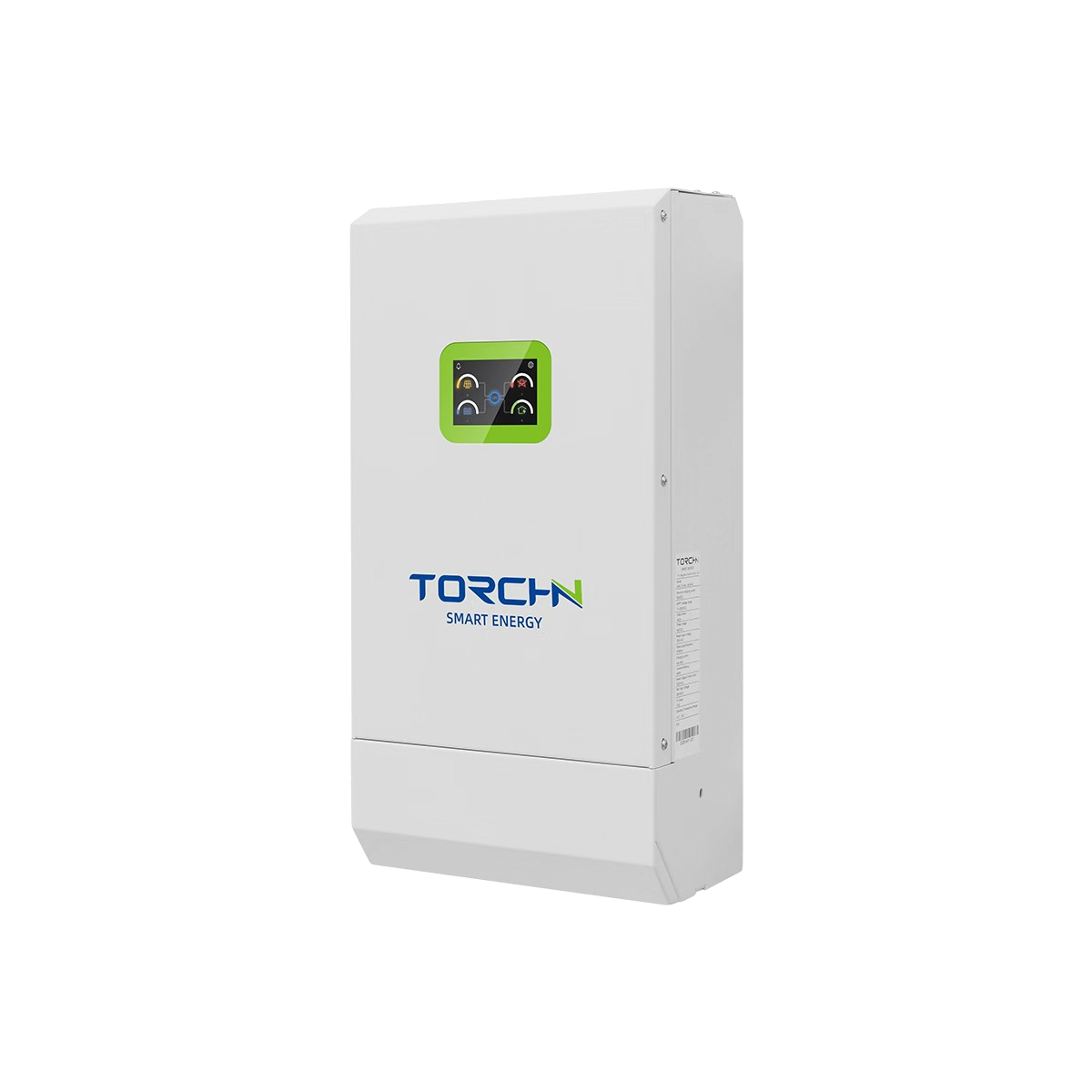
This TORCHN solar hybrid inverter page describes a project-matched platform for residential storage, off-grid power and small commercial backup.
Use boundary: confirm the final model, datasheet, battery protocol, certification, price and delivery terms before purchase.
System Value
The inverter connects PV, battery, grid or generator input, loads and remote monitoring in one operating logic for EPCs, distributors and system integrators.
Uses weather and history trends to estimate solar output so users can plan high-load periods earlier.
Turns SOC into a clearer remaining-time view for backup and off-grid scenarios.
Supports load priority, grid priority and battery priority logic for different grid and tariff conditions.
Collects alarms, link status and battery information so service teams can understand issues beyond an error code.
Monitors voltage, temperature, charge and discharge status to help protect lead-acid or lithium battery systems.
Shows generation, battery, load and warning information for overseas service, sample demos and distributor training.
Mini App Preview
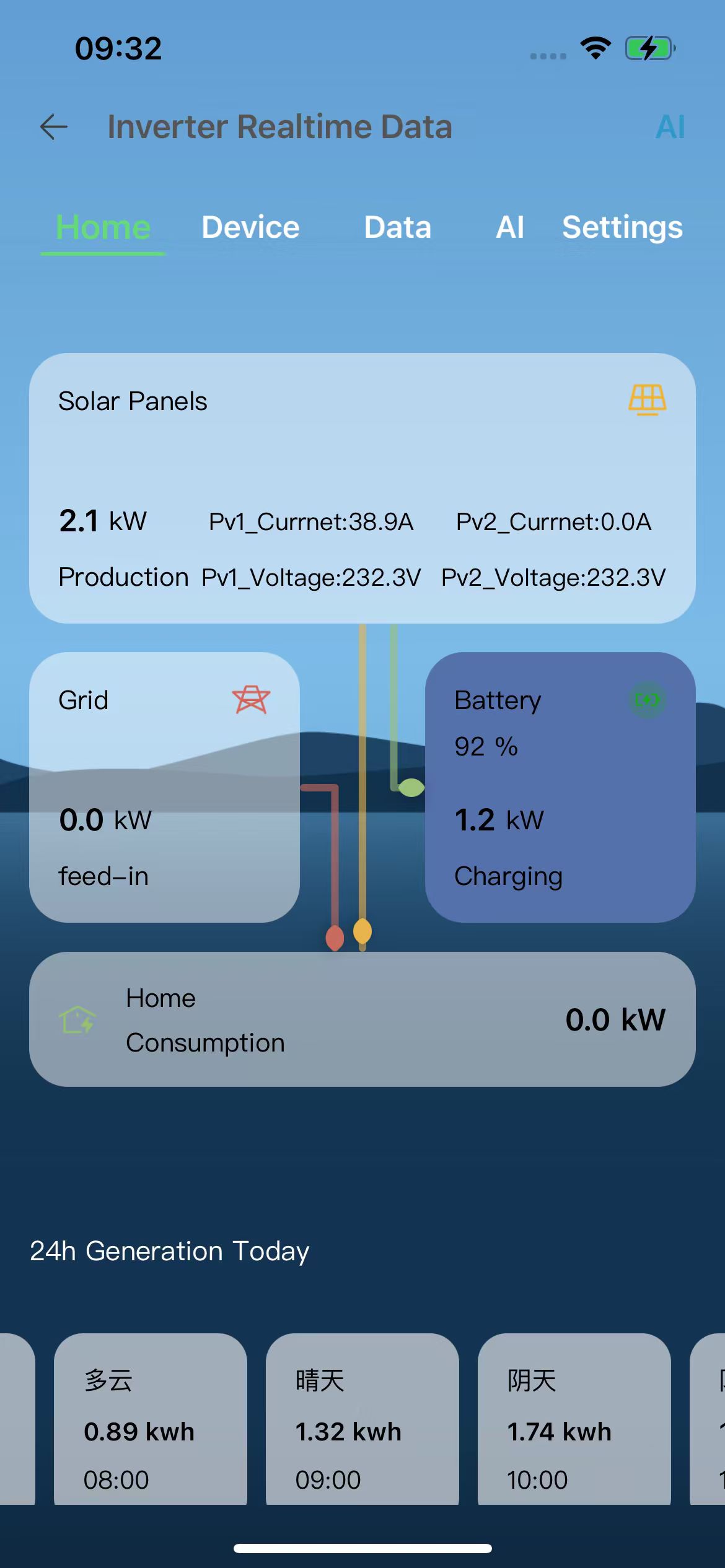
The embedded screens help buyers understand that the inverter is not just hardware. It is also the entry point for operation, diagnosis and long-term support.
Energy flow
PV / Battery / Grid / Load
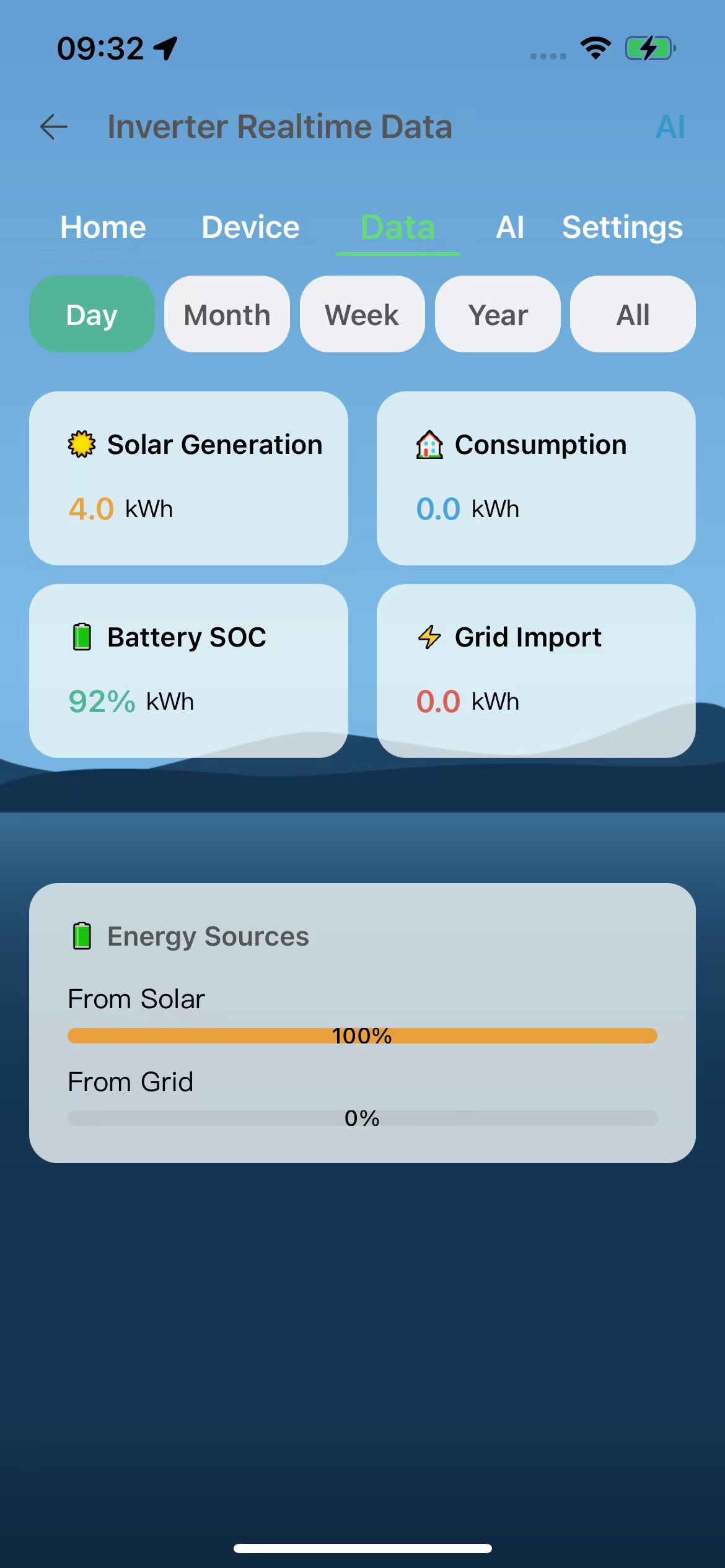
Generation data
Solar generation, SOC and grid import
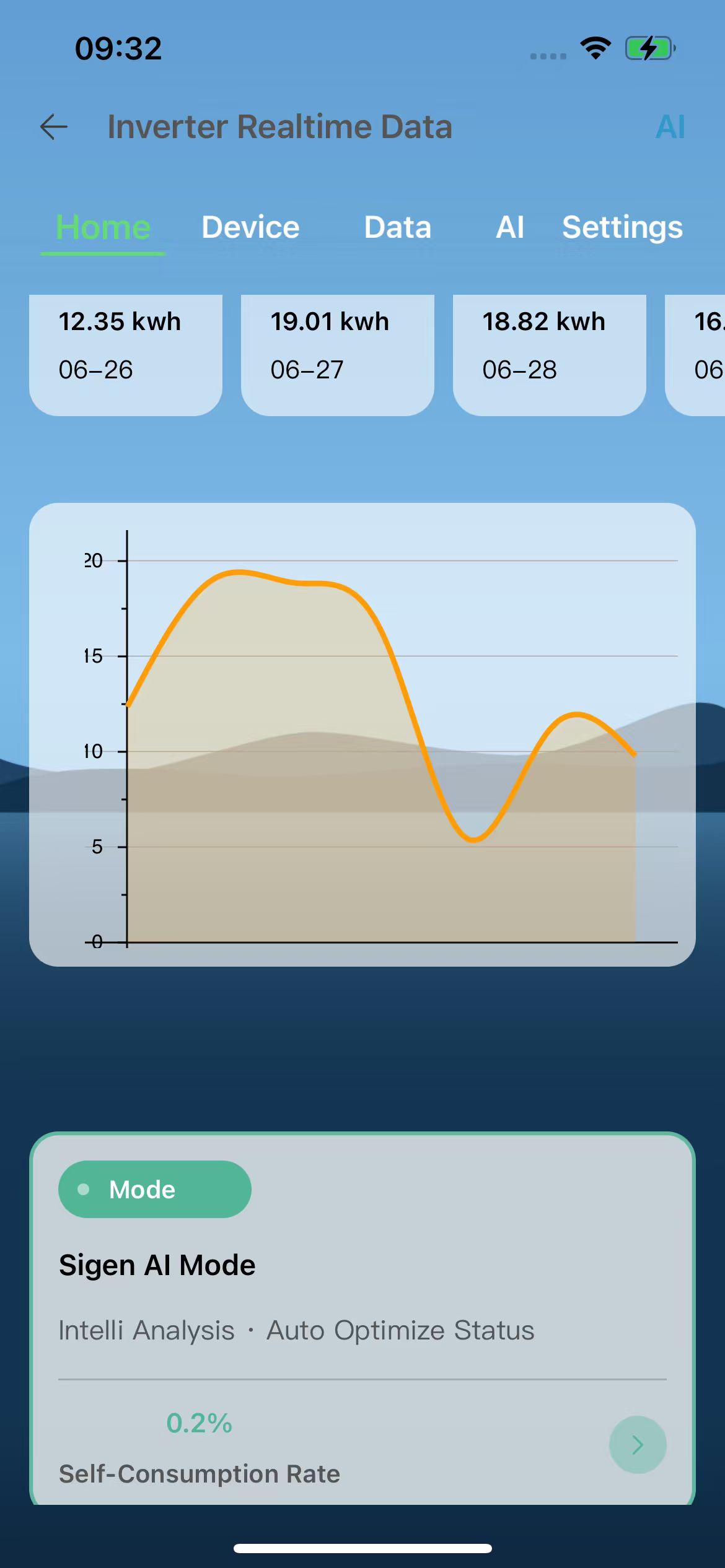
Operating curve
Self-consumption and operating status
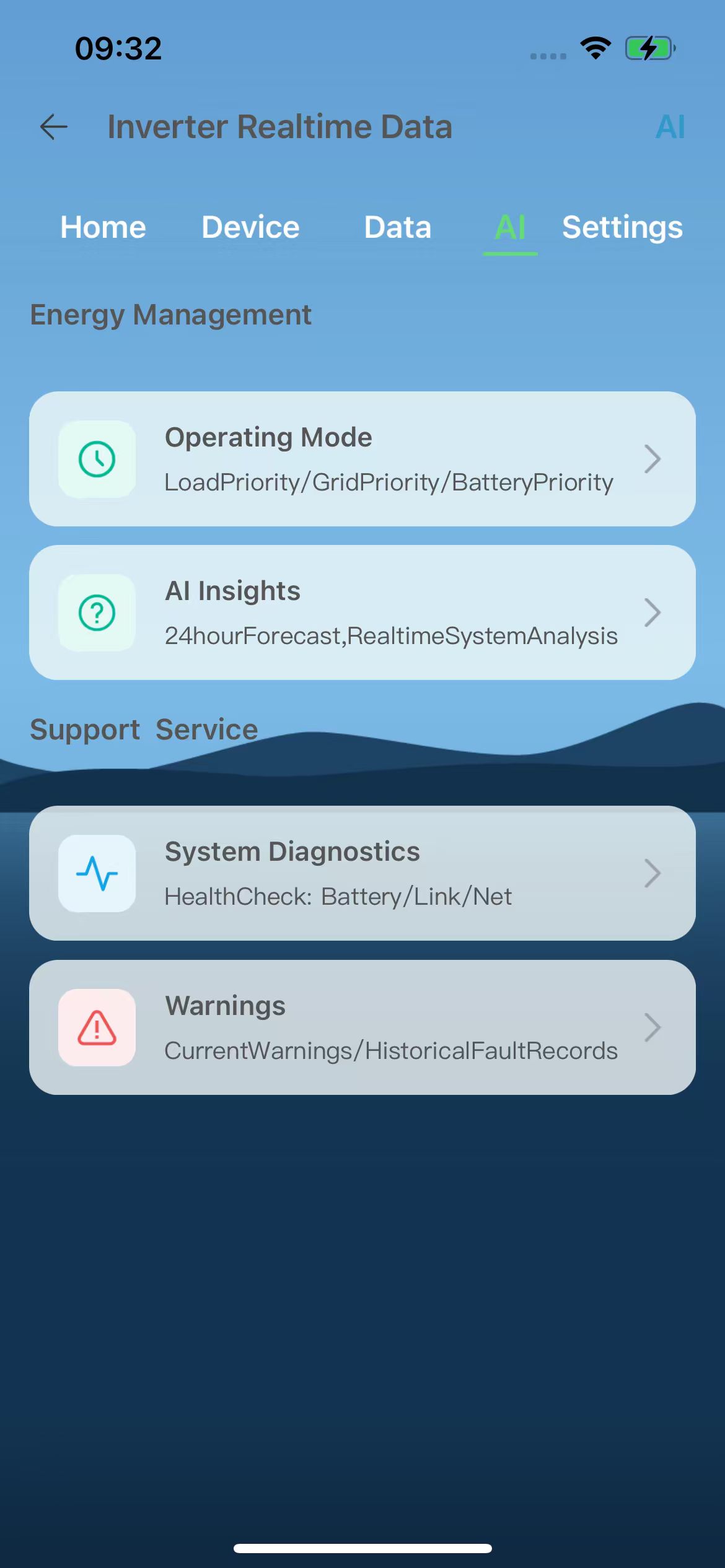
Diagnostics
Diagnostics, warnings and support workflow
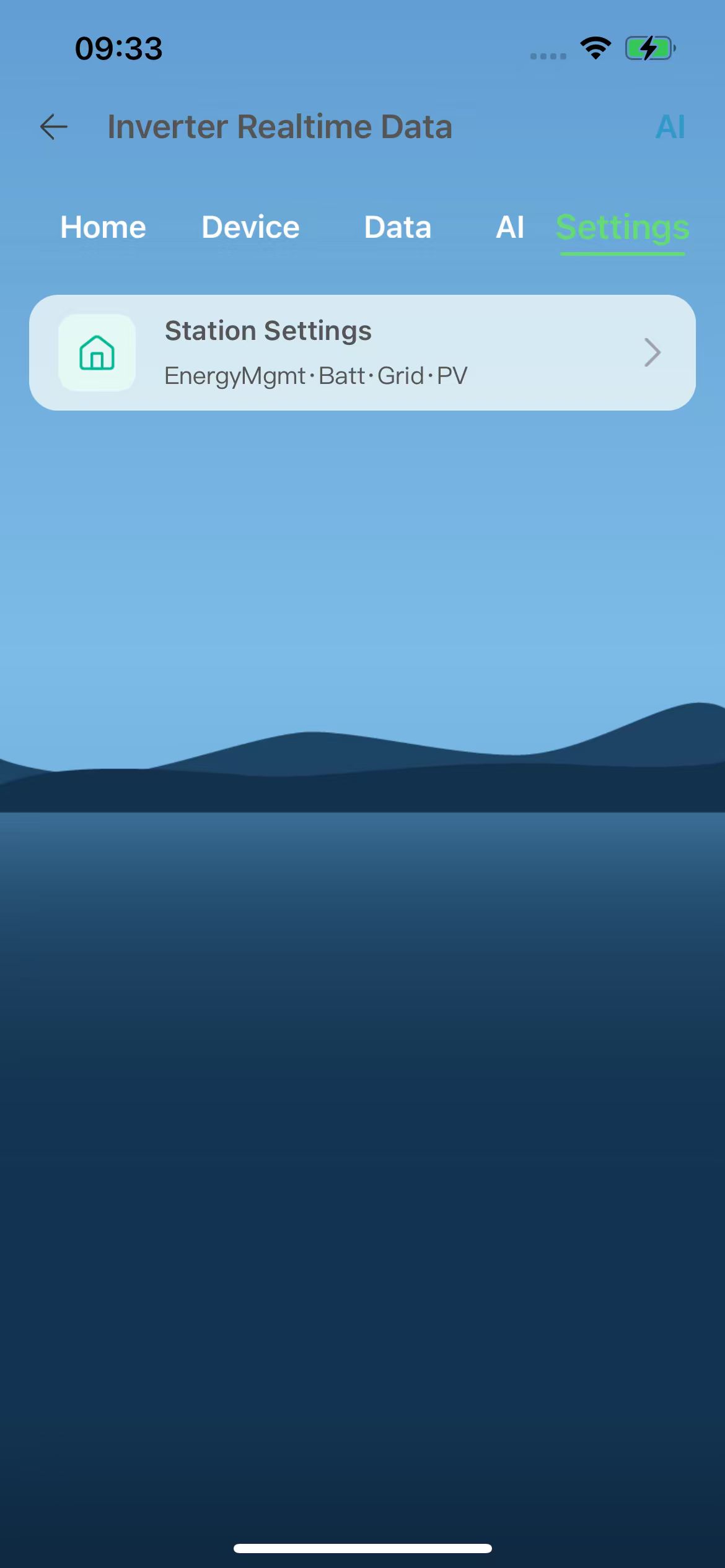
System settings
Energy management, battery, grid and PV
Product Design
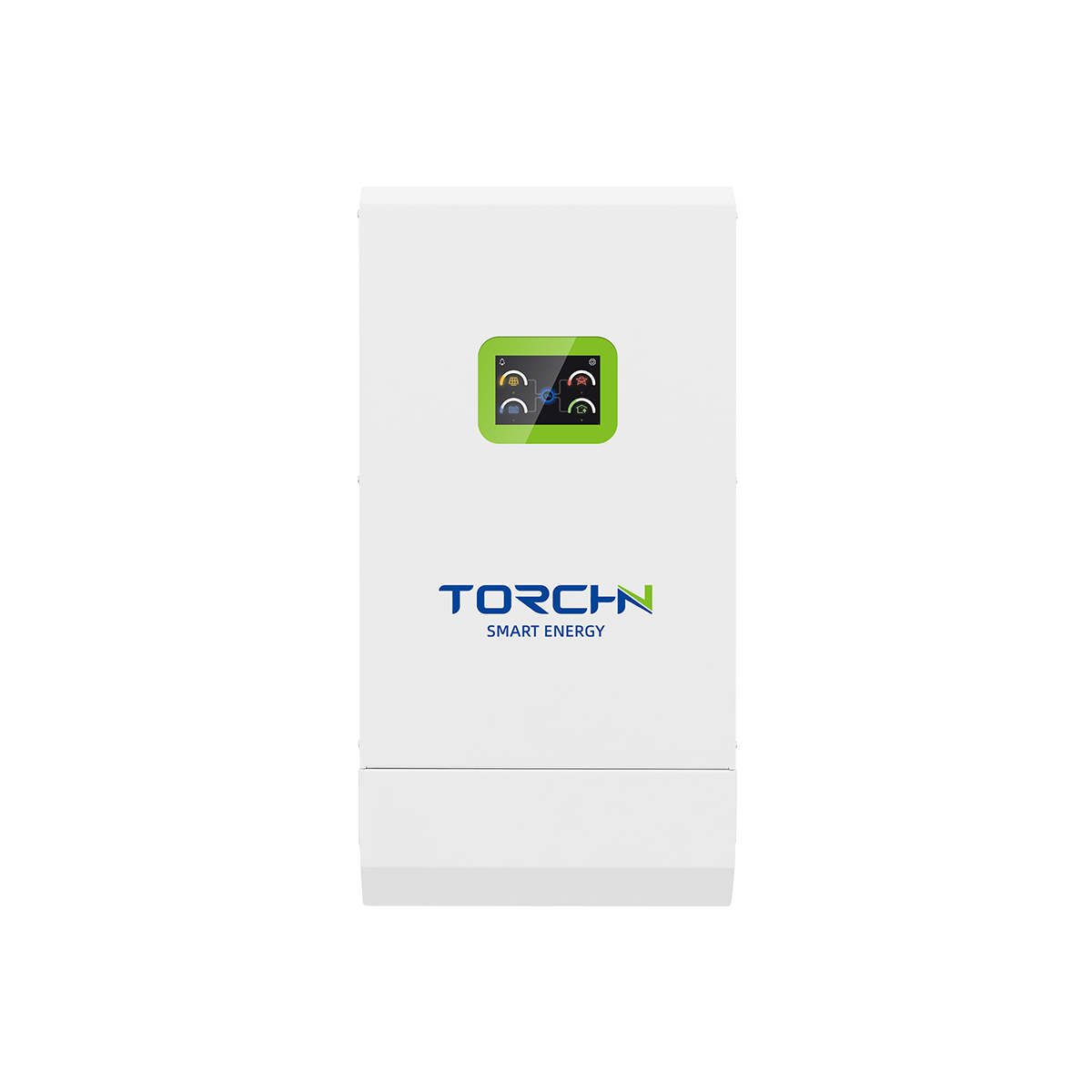
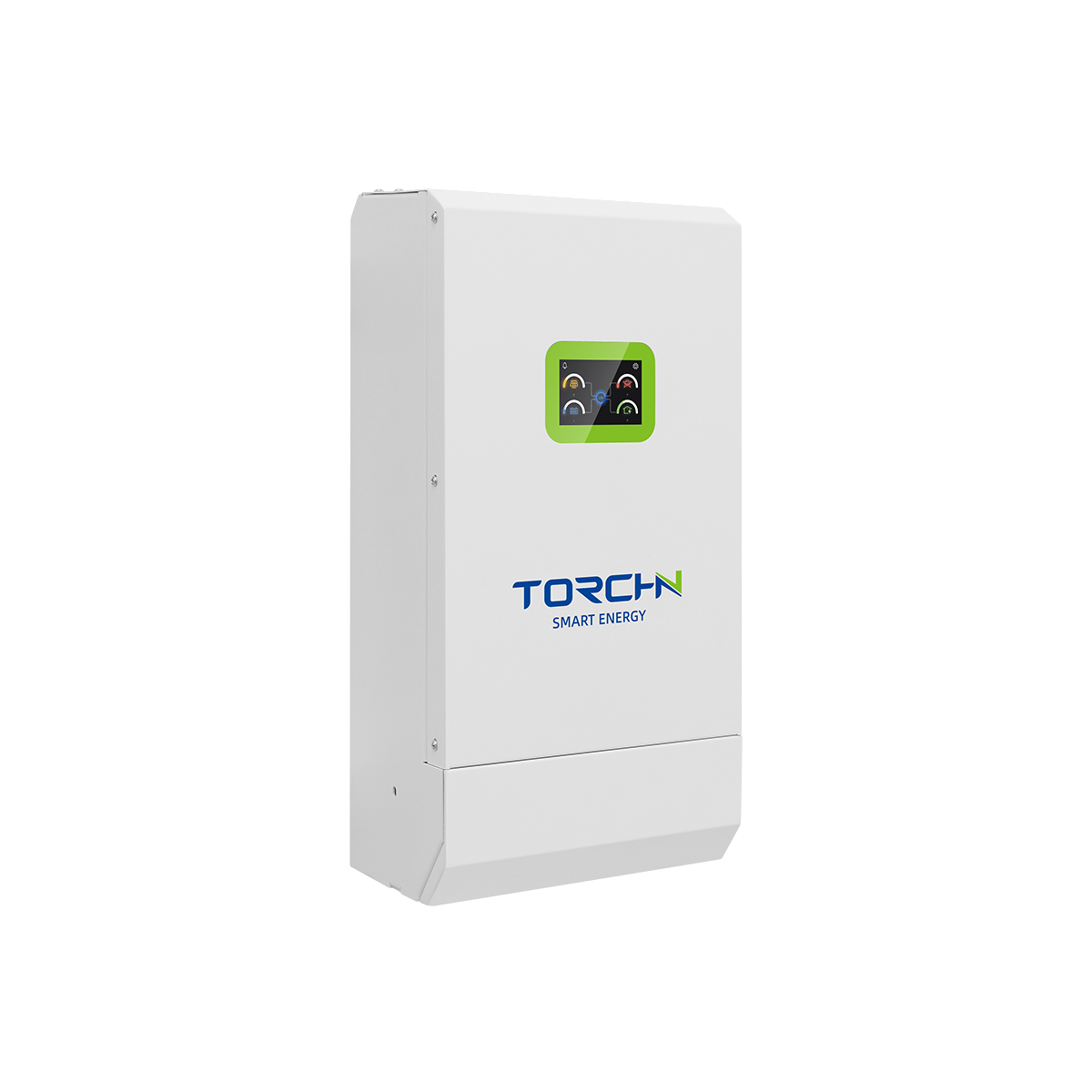
The compact enclosure is easy to arrange on a wall or in an equipment room, and can work with PV modules, storage batteries, distribution protection and communication modules.
Operation Support
After installation, users can keep track of generation, consumption, battery SOC and warning records, while installers can judge service issues more quickly.
Forecasts help users arrange high-power loads around expected solar output.
Remaining energy is translated into usable backup time for homes, farms and small businesses.
Warnings and likely causes are gathered in one place to reduce cross-border service friction.
Selection Fields
Exact model, power rating, battery voltage, PV input and communication options should be confirmed project by project.
| Model | Hybrid Inverter / confirmed by project |
|---|---|
| Rated power | 3kW / 5kW / 8kW / 10kW options |
| Application | Home storage / off-grid power / small commercial backup |
| Battery voltage | 24V / 48V / high-voltage platform by model |
| PV input | MPPT range confirmed by model |
| Grid input | Grid or generator input by solution |
| AC output | Single phase or customized output |
| Communication | App / mini program / RS485 / WiFi options |
| Smart functions | Forecast / runtime estimate / diagnosis / energy strategy |
| Protection | Overload, short circuit, over temperature, battery abnormality |
| Battery | Gel / lead-acid / lithium options |
| System | PV modules + battery + inverter + distribution protection |
Project Inquiry
Share load power, operating hours, battery voltage, grid or generator input, project country and quantity. We will suggest inverter, battery and PV matching options.
FAQ
A basic off-grid inverter mainly converts DC to AC and provides protection. A hybrid inverter also coordinates PV input, battery charging and discharging, grid or generator input, operating strategy and remote monitoring.
Yes. The final match depends on battery voltage, BMS communication, charge and discharge current, and required backup time.
The screenshots show the monitoring experience and function structure. Actual data depends on the final inverter model, communication module and project configuration.
Home solar storage, remote off-grid power, small commercial backup, unstable-grid markets, distributor samples and storage systems that need remote monitoring.